
Watertown Resident Lookup Sources
No single official list identifies every person who lives in Watertown. A sound resident lookup keeps each record in its proper lane. The Secretary of the State answers a current voter-status question. Watertown's assessor links an owner name to a parcel, while the Town Clerk's land index links people to recorded instruments. The Connecticut Judicial Branch identifies parties in public cases. The Town Clerk or Department of Public Health supplies certified vital records when access rules are met.
| Record | What it can confirm | Custodian | Access route |
|---|---|---|---|
| Voter lookup | Status, party, polling place | Secretary of the State | Online form; registrar fallback |
| Property card | Owner display, parcel and mailing address | Watertown Assessor | Free search; office help |
| Land index | Grantor or grantee role and instrument reference | Watertown Town Clerk | Online from 1996; counter for older material |
| Court index | Docket, role, court, dates and case type | Connecticut Judicial Branch | Online; clerk for older files |
| Vital record | Certified birth, death or marriage facts | Town Clerk or DPH | Application, ID, eligibility and fee |
| Credential | License type, status and listed address | Connecticut eLicense | Free online lookup |
Choose the source that fits the question. A polling inquiry belongs with election officials. A parcel-owner question begins with the assessor and deed index. A family event requires the vital-record route, not an inferred date from a directory. Historical names may need the library, History Museum, newspapers, yearbooks, or regional city directories. This separation prevents several records with the same name from turning into one false profile.
Confirm Watertown Voter Records
The Connecticut voter lookup asks for town, first name, last name, and full date of birth. Its response may show registration status, party affiliation, polling place, and absentee-ballot status when available. Connecticut calls a voter with no party affiliation “unaffiliated”; that differs from membership in the Independent Party. A failed result can reflect spelling, a registration-name variant, or a protected record. It does not prove that the person is absent from Watertown.
Open the official voter lookup source shown in the captured screen.
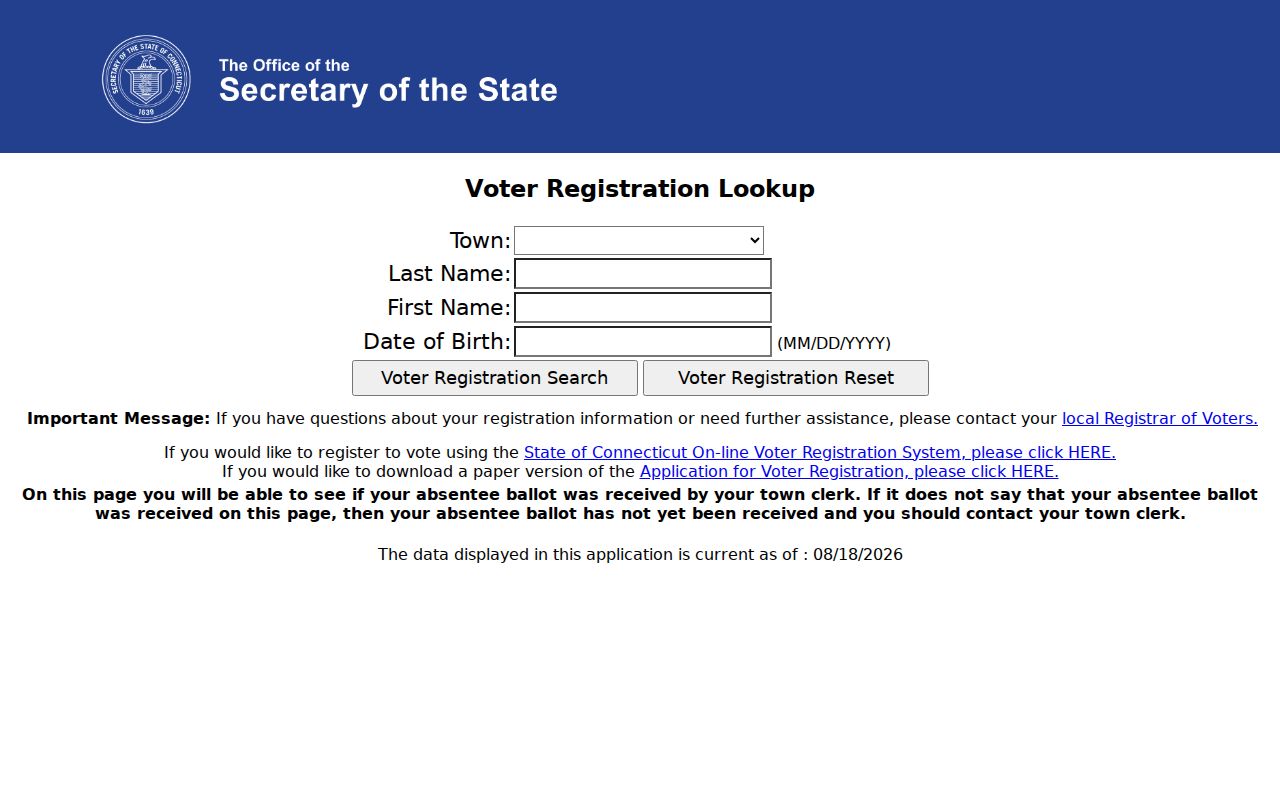
The form is person-specific, not a public roster of every address or block.
For a spelling problem, status correction, or local election question, contact the Watertown registrars. Their published public hours are Tuesday through Thursday, 9 a.m. to noon, with phone numbers 860-945-5239 and 860-945-4749. State voter-file copies are a separate, restricted process. The request costs $300 and permits defined election-related, scholarly, journalistic, political, or governmental uses, not personal list building.
Note: Full birth dates are search inputs, not public directory fields, and Connecticut privacy programs may suppress a voter record.
Search Watertown Court Names
Watertown cases route through the Waterbury Judicial District. The Superior Court party search requires a last name; first name, court location, case category, and case type can narrow it. Name matching offers Starts With, Contains, Is Equal To, and Sounds Like. Results can be sorted by location or name. Waterbury serves eight towns, so venue alone never proves Watertown residence.
View the Judicial Branch party-search source before comparing its fields.
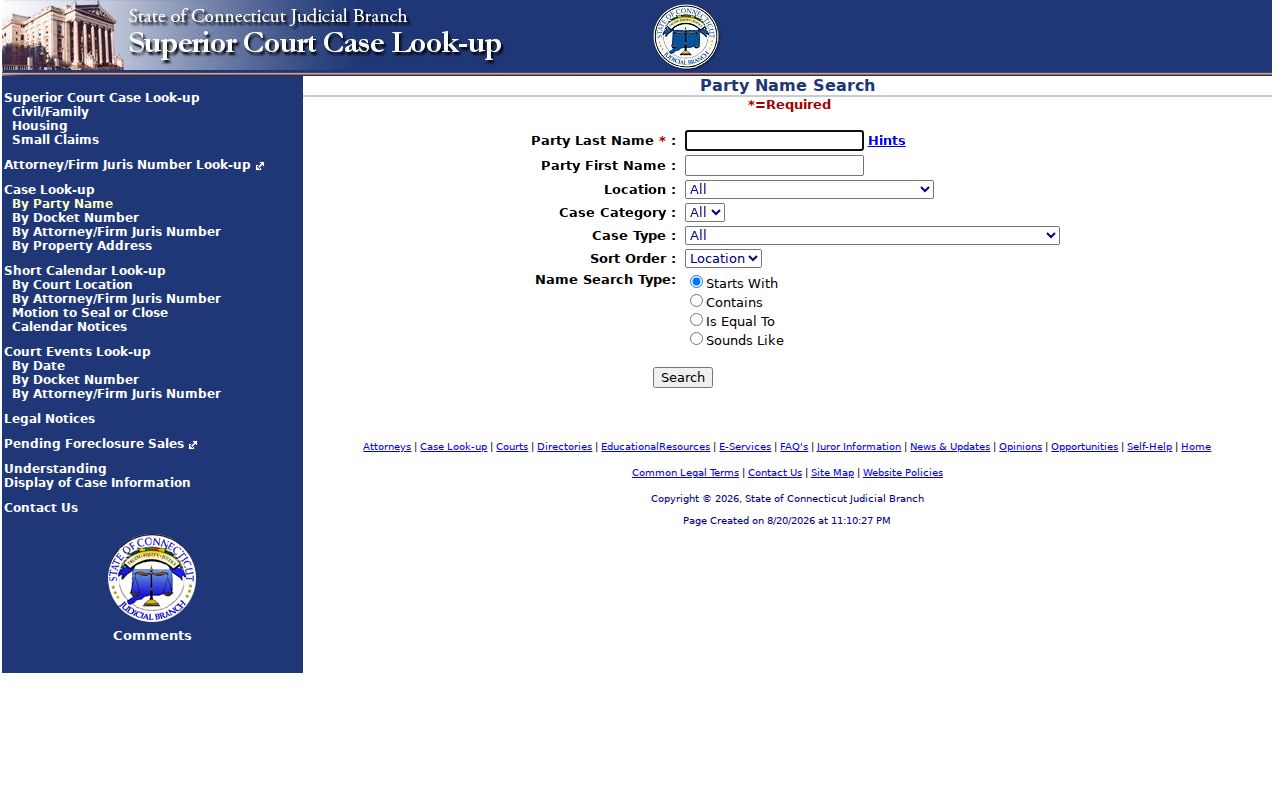
The form shows why first name, location, match mode, and case filters can reduce same-name results.
| Result field | How to use it |
|---|---|
| Docket number | Treat it as the stable case key. |
| Party role | Distinguish plaintiff, defendant, petitioner, or respondent. |
| Court location | Confirm venue without assuming residence. |
| Case type and dates | Separate similar names and place the event in time. |
| History and documents | Check public filings and status where available. |
Many civil and family electronic documents date from 2014 forward, while small-claims documents generally date from October 16, 2017 forward. The civil/family clerk at 300 Grand Street, Waterbury, handles older papers, certified copies, and incomplete histories. Criminal and motor-vehicle matters use a separate search. Juvenile, sealed, protected, and exempt records may not appear.
Verify a Watertown Resident Match
A name is an index key, not an identity finding. Use a stable, non-sensitive detail such as a parcel identifier, docket number, dated street entry, or recorded document reference. The assessor often works better with a last name alone. The Town Clerk advises searching deed-name spelling variants. Keep surname-first forms, initials, estate marks, and business names exactly as printed.
- Record the exact name and one reliable date or address. Test Watertown and Oakville as postal labels while keeping Watertown as the municipality.
- Check the assessor for owner, situs address, mailing address, MBL, and Unique ID. Do not call the owner a resident without more proof.
- Search the land index by grantor and grantee. Save document type, recording date, volume and page, and the person's role.
- Run the court or voter search only if it answers the question. Compare docket, role, court, date, or full-DOB input.
- Classify the match as verified, likely, or unresolved. Name the missing fact instead of guessing.
- Docket
- The court's identifying number for one case.
- Index versus image
- An index points to a record; an image shows the document itself.
- Certified copy
- An official copy authenticated by the record custodian.
- Situs address
- The parcel's physical location, which can differ from the owner's mailing address.
Two independent anchors are a safer minimum. An exact parcel and deed reference is stronger than two sites repeating the same old address. The full address method belongs on the Watertown streets page, while this workflow stays focused on one named person.
Watertown Resident Vital Proof
The Watertown Town Clerk accepts walk-in and mail applications for local certified birth, death, and marriage copies. The published local charge is $20 for an ordinary certified copy, and the Town describes same-day processing for ordinary applications. Mail requests need the form, identification, payment, and a self-addressed stamped envelope. The state DPH application hub covers statewide routes and special forms.
Review the Connecticut vital-record application source shown below.
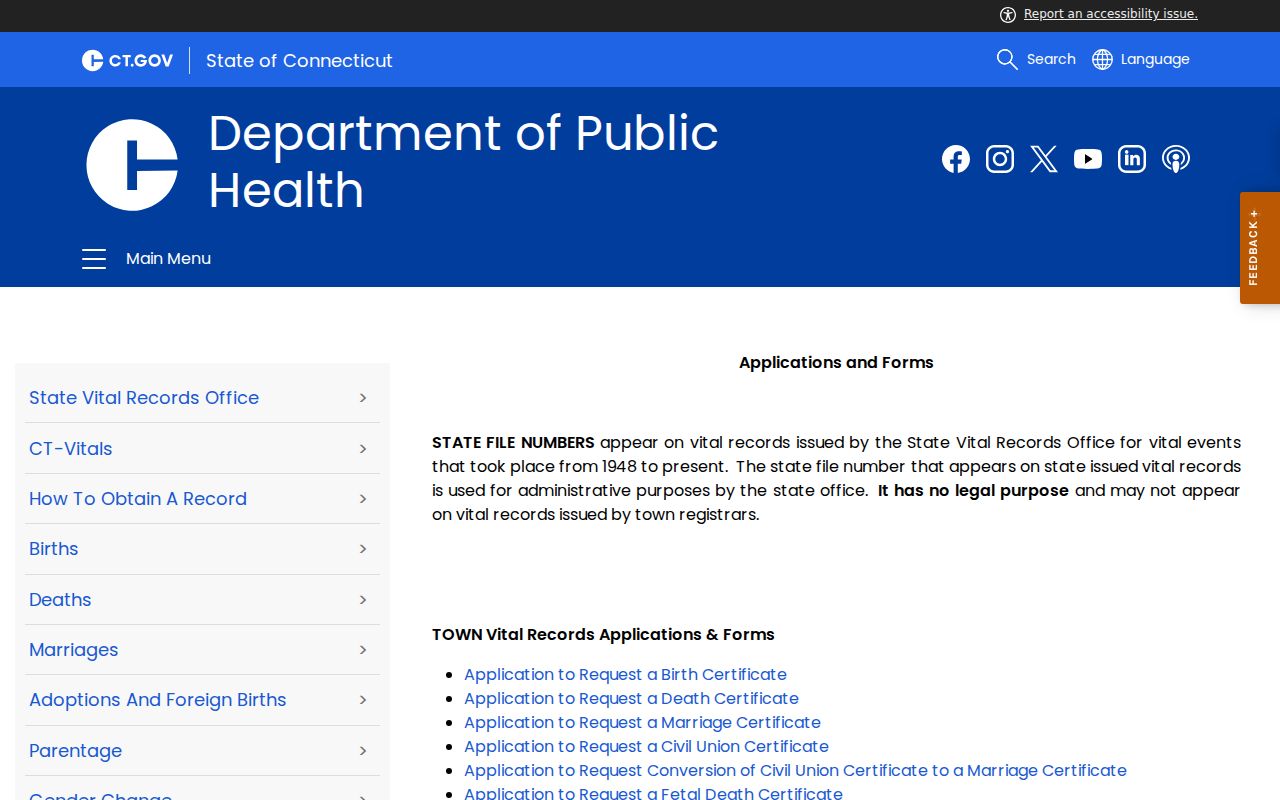
The choices show that access depends on the event type, date, requester, identification, and relationship proof.
Birth records under 100 years are restricted to listed eligible people and agencies. Older births are open. Death and marriage copies are generally available to requesters age 18 or older, but Social Security number portions remain restricted. State DPH holds statewide records from July 1, 1897 forward. Its ordinary mail fees are $30 for birth and $20 for death or marriage, and processing can take up to 12 weeks.
Reconnect Through Watertown Records
Family-history and reunion work can use dated sources without forcing a modern address match. Watertown Library offers licensed news and genealogy tools. The History Museum preserves family books, scrapbooks, photos, yearbooks, and local newspapers. A surname, street, date range, and named collection gives a volunteer a useful request.
Connecticut has a controlled route for an adult adopted person or qualifying adult child or grandchild to request an original birth certificate. The DPH procedure requires identification, relationship proof, a $65 fee, and may involve off-site records. This is the proper birth-parent route. Historical sources add context, but do not override adoption law or prove that a current same-name person is the relative sought.
Note: Search Oakville and regional Waterbury labels because Watertown residents often appear within broader directory and newspaper coverage.
Check Watertown Credential Records
The Connecticut eLicense lookup searches credential type, number, status, business or DBA name, address, city, state, ZIP, country, and name. The portal says its data updates instantly and serves as a primary credential source. A practice or license address is not proof that the holder lives there.
Open the eLicense source represented in this screen capture.
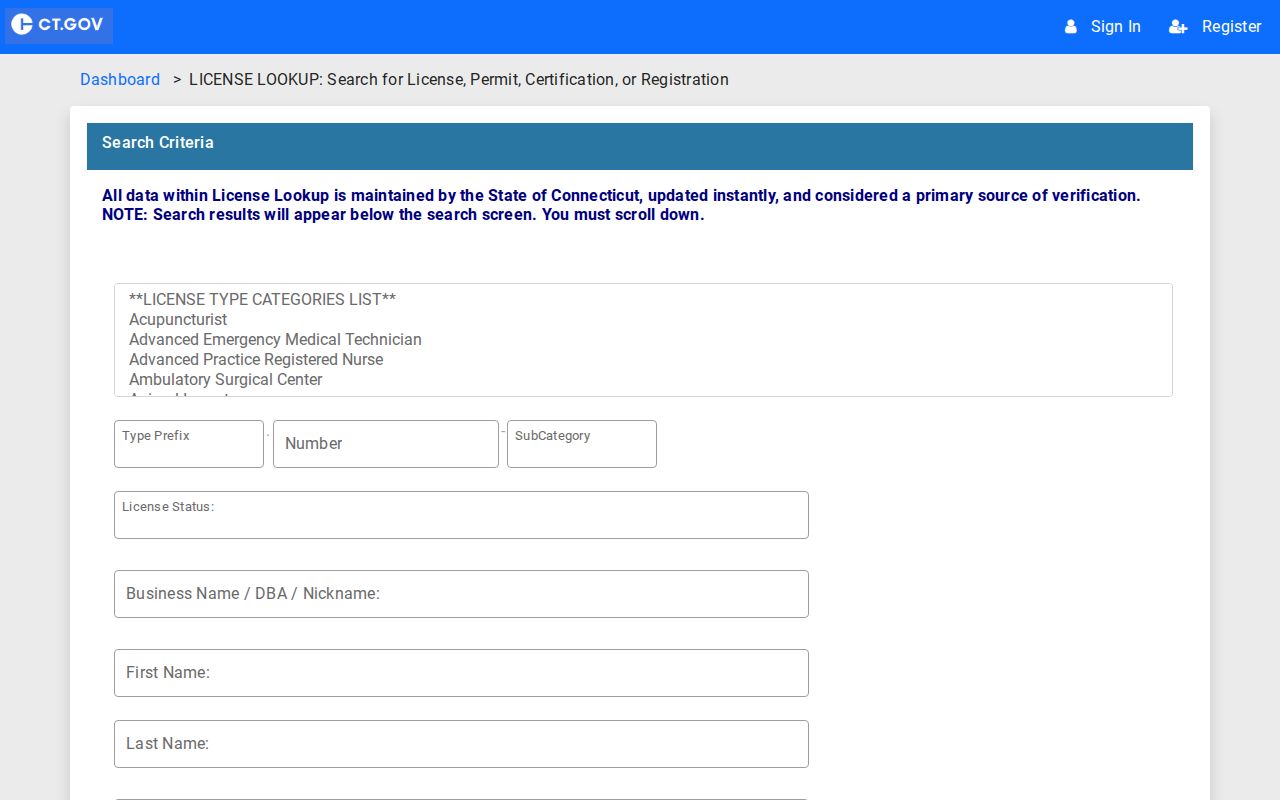
The name, business, credential, and address fields distinguish a professional record from a household record.
Local assumed names are filed with the Town Clerk. No verified public Watertown trade-name results index was found, so request a specific certificate. State business filings answer questions about an entity and its annual-report trail. They should not be merged into a resident profile.
Resolve Watertown Lookup Gaps
Online portals have hard edges. The deed index begins in 1996, older court documents may require a courthouse terminal, and modern vital records have no open name index. Under the Connecticut Freedom of Information Act, a request should identify the record and likely custodian. FOIA does not cancel a record-specific privacy law or require a new resident list.
Read the Connecticut FOI Commission access guidance captured below.
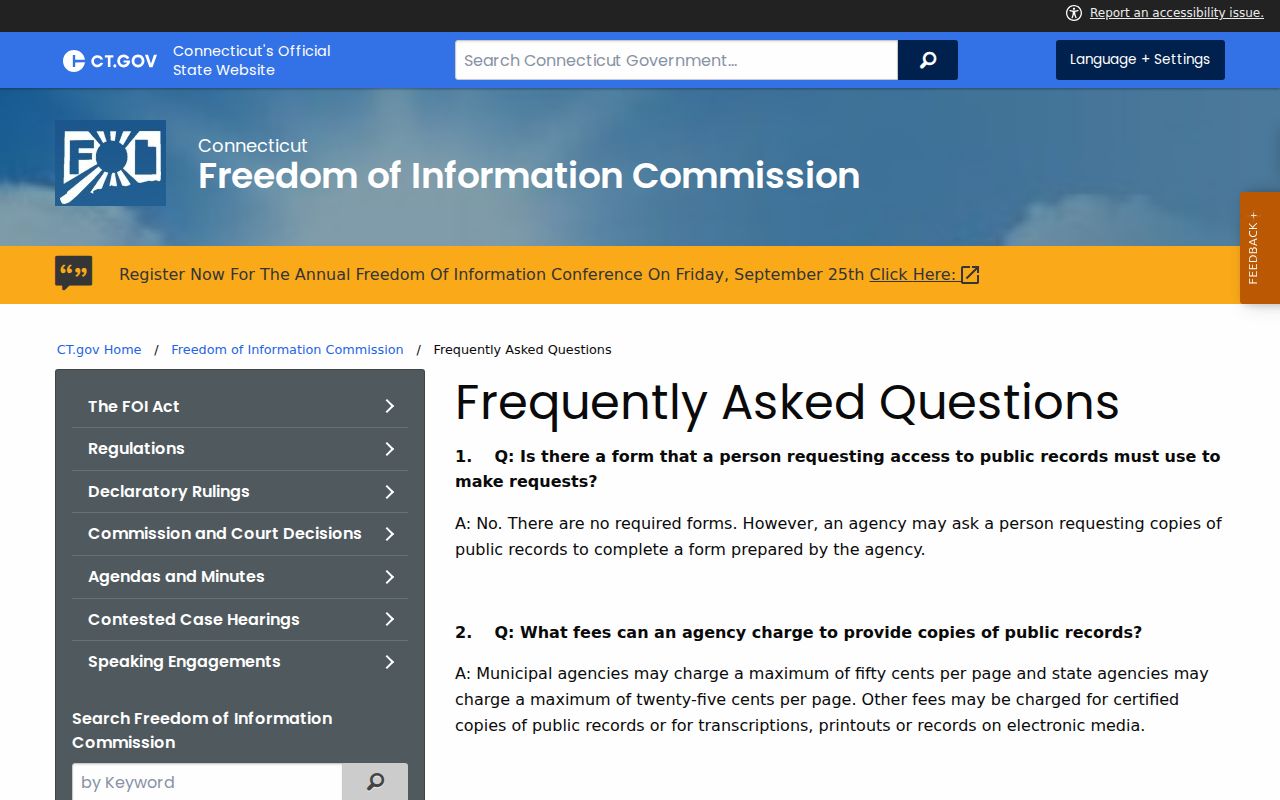
The guidance supports a focused request to the correct custodian when a portal lacks the needed record.
Connecticut DOC's inmate search serves only its defined custody population and current status.
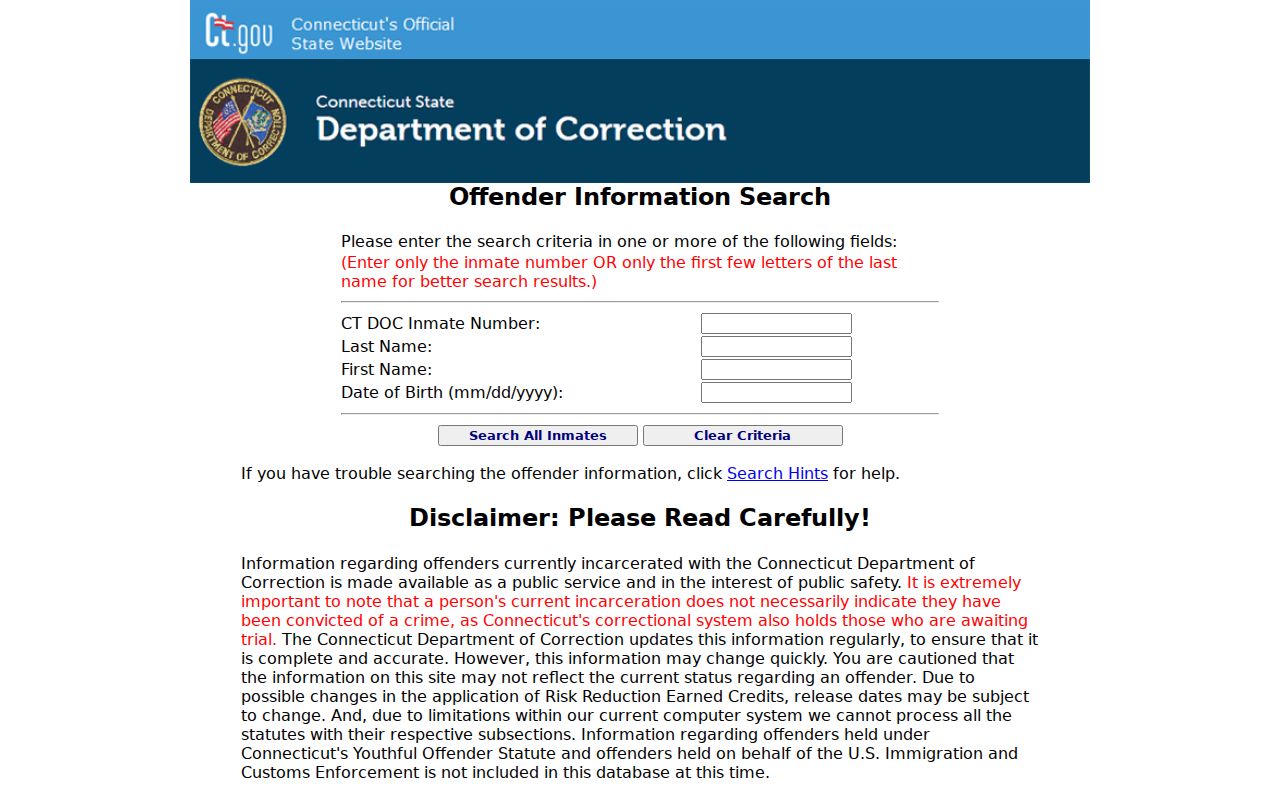
The source date and disclaimer must travel with any result because custody status changes.
Call the registrar for voter issues, the Town Clerk for deeds or local vital copies, the Waterbury clerk for court files, and the holding library or museum for historical pages. A “no result” should specify what remains unsearched: an older deed book, protected certificate, sealed case, missing newspaper issue, or population outside a portal's scope.
Lawful Watertown Resident Lookup
Connecticut's Safe at Home program provides qualifying survivors with a substitute address and can protect voter and agency address information. A separate voter privacy process can hide a registry record when disclosure would endanger a person or family. A substitute address is a safety boundary, not a puzzle. Do not try to reverse it through parcels, directories, or other records.
The Connecticut Data Privacy Act gives rights involving covered businesses, including access, correction, deletion, and certain opt-outs. Those rights do not erase a deed, court docket, or other official public record. For an error, contact the source office and ask about its correction, amendment, sealing, or appeal process.
Lawful use. Use a resident lookup only for lawful personal research. Never use public information to stalk, threaten, harass, intimidate, impersonate, or harm anyone.