
Watertown City Directory Shelf
Watertown's directory trail runs through regional volumes rather than a tidy town-branded shelf. Catalog records point to three useful periods. No catalog supplies a full publisher list or an unbroken local run. Treat each catalog entry as a locator only. Pull page-level names and entry fields from the actual volume, microfilm, or scan.
| Collection | Years | Where held | Access |
|---|---|---|---|
| Waterbury, Naugatuck, and Watertown directory | 1910 | FamilySearch catalog, film 1723761 / DGS 8888416 | 35mm microfilm; catalog locates the item |
| Waterbury directory including Naugatuck and Watertown | 1929-1932 | National Archives city-directory guide | Use holding record, library, or archive copy |
| Waterbury suburban city directory | 1962 | FamilySearch Digital Library | 1,018-page catalog record; restrictions may apply |
| Local news, scrapbooks, and yearbooks | 1881-2014, collection-specific | Watertown History Museum Digifind archive | Free keyword search and category browse |
| Local histories and family books | Varied | Watertown History Museum | Visit or targeted volunteer request |
The public library pages name no complete printed run and no Watertown criss-cross title. The History Museum claims no directory set either. Before a visit, ask for an exact title, year, format, publisher, and access rule. Gaps must never be filled by assuming annual publication.
Watertown Hides in Regional Directories
The FamilySearch catalog describes the 1910 Waterbury, Naugatuck, and Watertown directory as 35mm microfilm. Its record lists the publication year, film number, Digital Group Number, collection, and shelf note. No resident page appears in the catalog itself. So name, address, spouse, and occupation fields stay unverified for that volume until the film is read. The National Archives city-directory guide lists a Waterbury directory for 1929 through 1932. It includes Naugatuck and Watertown. A later find is a 1962 suburban directory catalog record covering Watertown. It also covers Middlebury, Terryville, Thomaston, and Wolcott. The lesson is simple. Search every town and regional label rather than assuming Watertown stands alone in a title. Note: Catalog metadata proves a volume exists. But only the filmed or scanned page proves what an entry actually says.
Watertown Directory Clues Online
The History Museum's Digifind local archive bridges many gaps between city directory years. Its collection menu spans newspapers, scrapbooks, and yearbooks. The runs are uneven by design. Town Times covers 1947-2000, the scrapbooks run 1932-2014, and the yearbooks stretch from 1917 to 2010, while older newspaper titles carry shorter spans reaching back to 1881. Open the free Watertown digital archive to browse the collection menu itself.
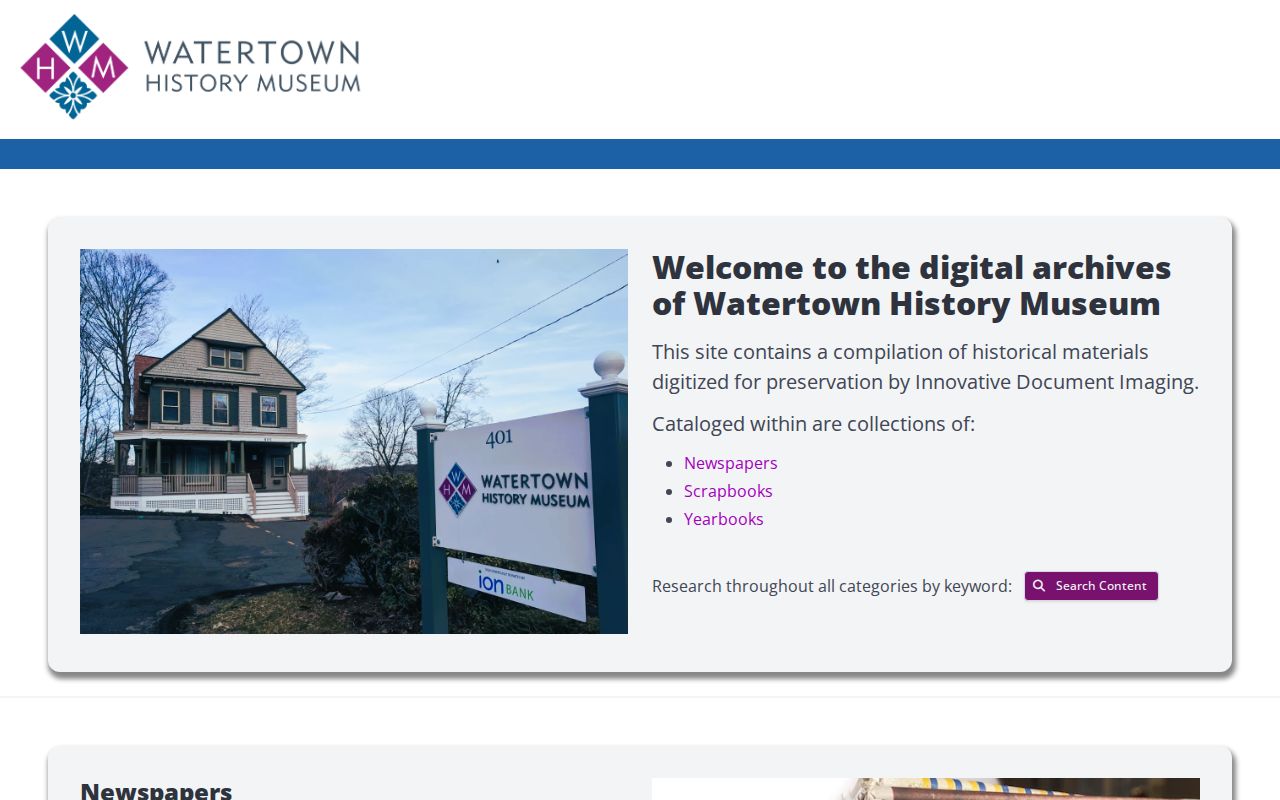
Switch methods when one tool stalls. Use Search Content for a name, street, school, or firm. Then browse a category year by year whenever OCR misses a faded page or an unusual spelling.
Read Watertown Directory Entries
A city directory entry is a dated lead, not proof of present residence or title. Entries often carry a name, address, trade, spouse, boarder status, or widow notation. No page-level Watertown sample appears in these catalogs. Photograph or transcribe the volume's own abbreviation key. Do this before decoding any mark.
| Printed name | Copy spelling, initials, and household punctuation exactly. |
|---|---|
| Street line | Retain the printed number, road label, and any village name. |
| Trade or firm | Record it only when the actual entry and key support the reading. |
| Household mark | Check the volume key before reading spouse, boarder, owner, or widow status. |
| Page citation | Save title, year, page, and image or film locator. |
- Criss-cross directory
- An address-first section arranged by street and house number rather than only by surname.
- Householder index
- A list keyed to the person associated with a household; its scope depends on the volume.
- Abbreviation key
- The publisher's legend for short forms and marks, which should be read before interpreting an entry.
Not every volume has a reverse section. Browse a street section if one exists, or work from alphabetical entries and build a careful address index of your own. Call a book a criss-cross only after seeing that feature in it.
Watertown Museum Research Boundaries
The Watertown History Museum holdings cover family genealogies and early-family books. Cemetery publications, yearbooks, and logs are included too. Anniversary books and historical scrapbooks round out the collection. Named sources run from Watertown Early Families to the Watertown Brides scrapbook for 1928-2000. One limit matters greatly. The museum states plainly that it holds no official records. There are no birth, death, marriage, land, or probate records in its care. Read the museum's own holdings and limits page for the full statement.
That boundary saves hours of dead ends. Use the museum for family and place context, then request a legal copy from the Town Clerk, state office, probate court, or archive that actually holds the record.
Request Watertown Family Files
When a city directory catalog yields no page online, the museum's research request service is the best fallback. Give volunteers a surname. Add a street, a date range, a named collection, and the pages or facts sought. The posted nonmember charge is $25 for the first ten black-and-white pages. Members receive those pages free. Extra black-and-white pages cost 25 cents each; color pages run 75 cents each. Timing deserves patience. The museum aims to acknowledge a request within 72 hours. Completion can take anywhere from one week to two months. Before mailing a letter or sending an online note, follow the current request instructions. Those instructions control over any summary.
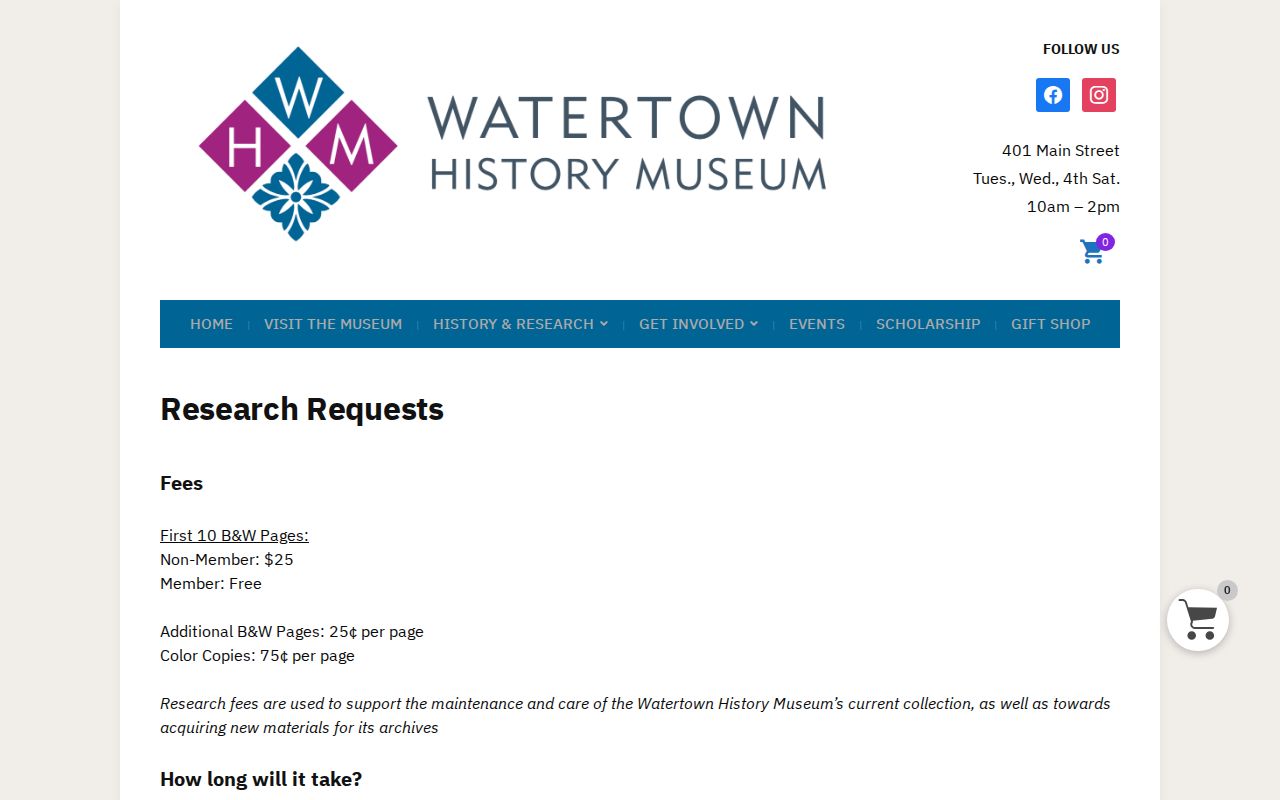
The request page keeps expectations clear. Volunteers supply research help and copies from museum holdings, not certified public records or a title opinion.
Watertown Library Directory Bridges
The Watertown Public Library at 470 Main Street, with its Oakville branch at 55 Davis Street, is the reference route when catalog access fails. Licensed resources require a Watertown card. The list includes researchIT CT and America's News with Town Times material. HeritageHub adds obituary and death notices from 1704 to the present. A large Passenger and Immigration Lists Index rounds out the set. No public page identifies a complete local city directory shelf or a dedicated genealogy room. So call the reference desk and ask. Request the precise Waterbury, Naugatuck, Watertown, or Oakville title. Ask for its format, year, and use rules. The main library lists 860-945-5360; the Oakville branch lists 860-945-5368. Verify current hours before any visit.
Watertown Directory Timeline
A few local institutions shaped where Watertown's historical records live today. The town split from Waterbury in 1780. Its library opened in 1865, and the Oakville Library Association followed in 1914. The two merged in 1969. That is why older Watertown residents directory volumes and city directory holdings now sit in one collection. The History Museum, founded in 1945, relocated to Main Street in 2019. Together these dates explain a lot. A resident lookup for past residents of Watertown can send you from a town archive to a regional or state collection.
| 1910 | Regional Waterbury, Naugatuck, and Watertown directory cataloged on microfilm. |
|---|---|
| 1929-1932 | NARA guide lists Waterbury directories that include Naugatuck and Watertown. |
| 1947-2000 | Town Times run is available in the Digifind archive. |
| 1962 | Suburban city directory includes Watertown and surrounding towns. |
| 2020s | Digitized news, scrapbook, and yearbook sources support mixed paper and online research. |
County geography adds one more wrinkle. Connecticut disbanded its county governments in 1960. Litchfield County still names the region, but it holds no clerk, deed, or assessor records office to search for a county residents directory.
Trace Watertown Families by Directory
City directories shine between census years. The National Archives has digitized schedules from 1790 through 1950. The 72-year release rule leaves long gaps. A Watertown city directory entry dated between those schedules can point you to the right household. It can also lead to a newspaper issue, a yearbook, or an obituary. Treat the printed entry as a clue. It proves where a name appeared in a street directory. It does not tell the whole story behind it.
- Start with a surname, street, and rough year from family papers, a parcel card, deed reference, or newspaper.
- Choose the verified 1910, 1929-1932, or 1962 volume that brackets the date, then inspect the actual alphabetical and street portions.
- Copy the printed entry, page, abbreviation key, and nearby lines. Keep Watertown, Oakville, Waterbury, and Naugatuck labels as printed.
- Compare the nearest released census through the National Archives census resources, then test the name in Digifind news or yearbooks.
- Use a deed, obituary, cemetery source, or museum family file as a second layer. Mark conflicts instead of merging them.
When a name drops out of a Watertown residents directory, several explanations fit. The person may have moved, died, remarried, or joined a relative's household. Omission happened too, since compilers missed people regularly. Check later editions, census schedules, obituaries, and deed dates before settling on one answer. For address-keyed work on current residents, use the Watertown streets page. An old volume will not serve that purpose.